John Kinney
Founder & Director of Winemaking
I don’t think you choose to become a winemaker any more than you choose to become a scientist. It is something that grows within. I have always been fascinated by food and wine, and by the historical methods through which people prepared, shared, and celebrated them.
After moving to California, I experienced the Bay Area’s food and wine revolution firsthand and became one of the early members of the Slow Food Movement, dedicated to preserving traditional foods and foodways. Alice Waters, Jeremiah Tower, and Robert Mondavi were among my heroes. It was impossible not to be inspired by the creativity and energy of that time — it felt a little like living during a modern Renaissance.
I was equally fascinated by Livermore Valley. From its earliest days, the valley had earned a reputation for producing some of the finest Bordeaux-style wines in the world. Yet by the end of the twentieth century, much of that reputation had faded. A handful of large wine companies dominated the region, and the excitement that once surrounded Livermore wines had largely disappeared. I felt compelled to rediscover the valley’s story.
Occasio was founded in 2007. Named for the Roman Goddess of Opportunity, Occasio represents a simple truth: opportunities often appear for only a moment before they are gone forever. Looking back on my own life, I realized that my greatest regrets were rarely mistakes made, but opportunities left unexplored. It seemed a fitting name for a winery dedicated to curiosity, discovery, and possibility.
From the beginning, my goal was not simply to make fine wine, but to craft wines that reflected the unique history, culture, and character of the places from which they came.
My Muse
It is said of Henri Jayer, the late Burgundian winemaker renowned for his legendary Vosne-Romanée Cros Parantoux, that he created his wines in his head years before they reached the bottle. I have been doing the same for more than forty years. It is only in the last decade-plus that I have been putting those thoughts into bottle. This is the beginning of what I hope will be a long voyage of learning and discovery.
I founded Occasio with a deep desire to contribute to the valley I have come to revere. Livermore Valley remains my muse. Its history, its people, and its vineyards continue to inspire me every day. The classic wines that once brought international recognition to this valley remind us of what is possible when place, craftsmanship, and purpose come together.
My work has always been guided by a fascination with provenance — the belief that great wines are inseparable from the stories, cultures, and landscapes that shape them. Whether exploring Livermore Valley’s historic heritage varietals or seeking exceptional vineyard sites that speak clearly of their origins, I remain committed to crafting wines with authenticity, character, and a true sense of place.
That pursuit is never finished. There is always another vineyard to understand, another vintage to interpret, another lesson to learn. Some opportunities reveal themselves only after years of observation, patience, and study. Others appear in an instant and demand action.
Craft Winemaking
For thousands of years, the crafting of wine has been inseparable from the history and culture of a place. Long before wine was discussed in terms of scores and trends, it was part of daily life, shared at the table alongside the foods, traditions, and stories of a region. Perhaps that is why local foods and local wines pair so naturally — they are expressions of the same landscape.
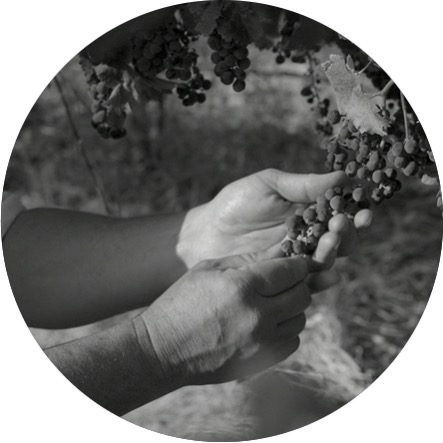
Our wines are handcrafted from beginning to end. Time in the vineyard is extensive: walking, observing, analyzing, tasting, and waiting for the right moment.
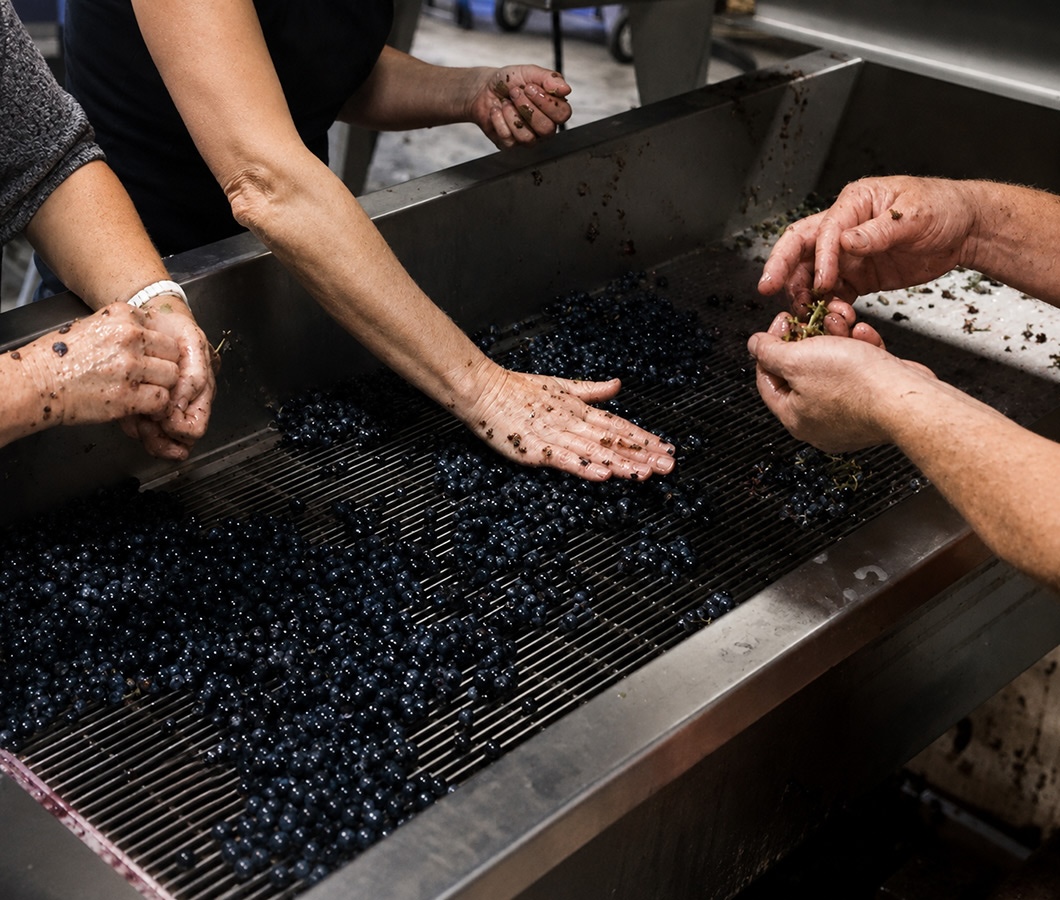
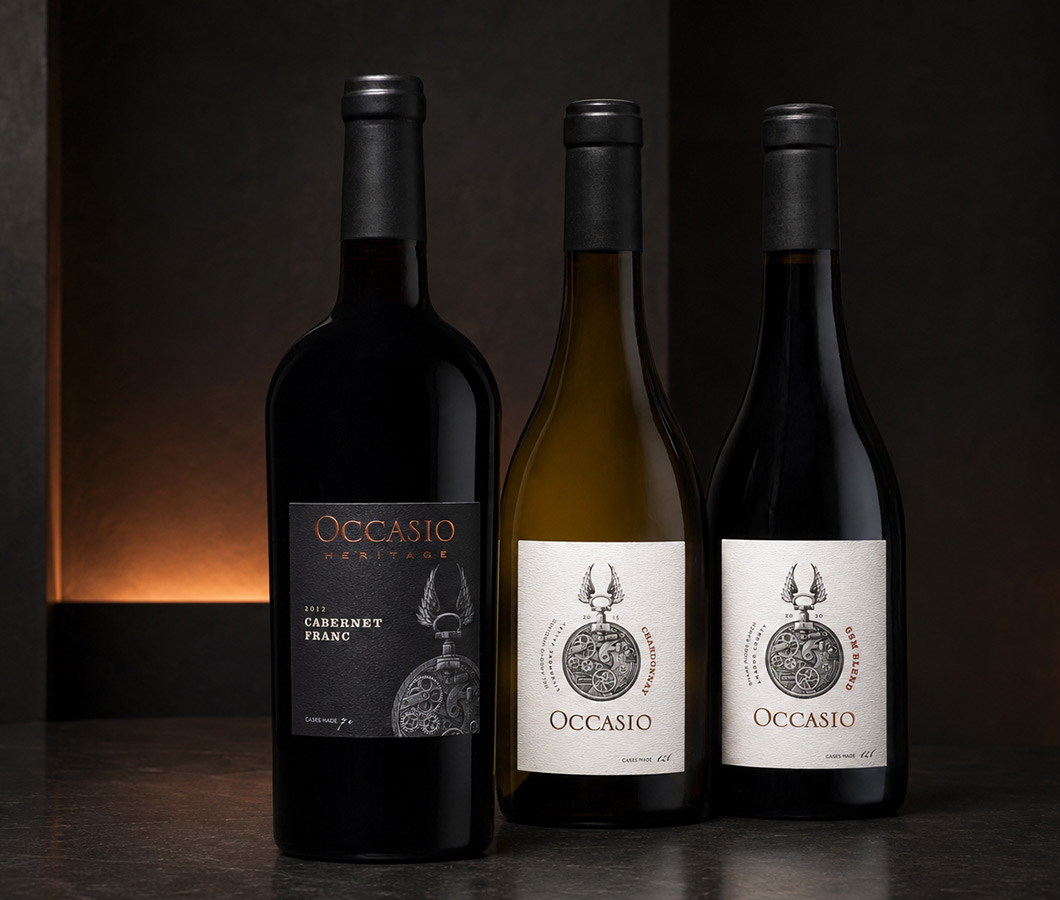
We hand harvest. We hand sort. We intentionally keep production small so that nothing escapes our attention. Even our bottling line moves at a pace that some might consider old-fashioned. Most wines are produced in quantities of fewer than 150 cases per varietal. This deliberate approach allows us to preserve the integrity of the fruit while expressing the unique character of each vineyard and vintage. The result is a collection of wines that reflect not only terroir, but the history, culture, and opportunity that shaped them.