
Occasio Classic Sangria
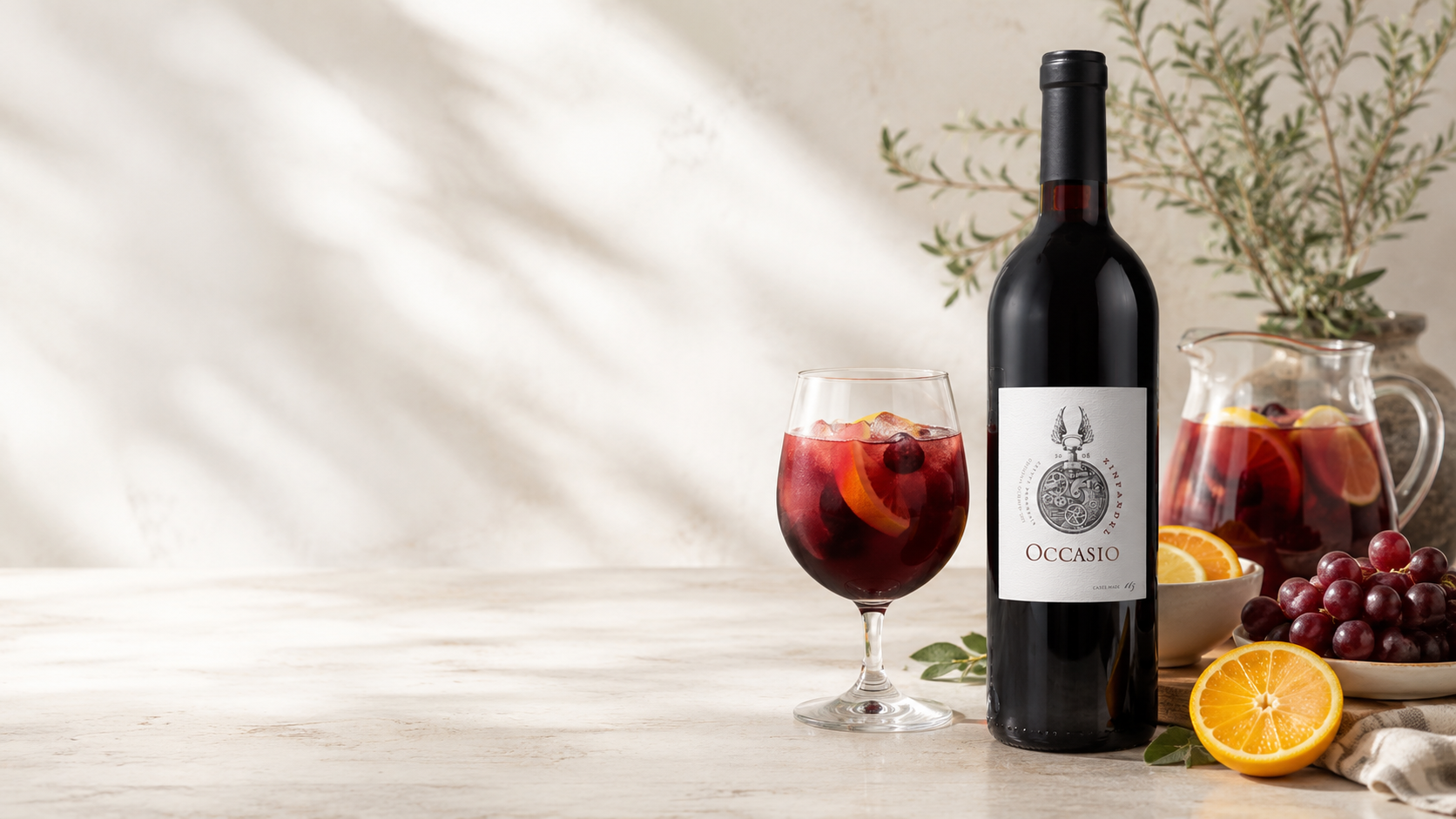
Classic sangria does not need to be complicated. Wine, citrus, a touch of orange liqueur, and just enough sweetness can come together in the time it takes to chill a pitcher.
This easy version is built for the moment when friends are already on their way. Fresh orange juice softens the edges of the wine, Cointreau adds fragrant citrus depth, and a small amount of simple syrup brings everything into balance. A splash of club soda at the end keeps the pitcher lively without turning it into a sparkling-wine cocktail.
Nearly any dry Occasio red will work. A lighter red makes a brighter, more refreshing sangria; a fuller wine gives the pitcher greater depth and structure. Whatever bottle you choose, allow the wine to remain recognizable.
Taste before serving. The fruit and sweetness should support the red wine—not bury it.
Makes approximately 1 to 1.1 liters, or five to six 6-ounce servings
Ingredients
- 1 bottle (750 mL) Occasio red wine, chilled
- 120 mL fresh orange juice
- 45 mL Cointreau or another orange liqueur
- 30 mL 1:1 simple syrup, plus more to taste
- 15 mL fresh lemon juice
- 3–5 drops 10% saline solution, optional
- 3 thin orange slices, cut into halves or quarters
- 2 thin lemon slices, cut into halves or quarters
- 120 mL chilled club soda, optional
- Ice, for serving
Method
Build the sangria base
In a pitcher, combine the orange juice, Cointreau, simple syrup, and lemon juice. Stir until completely blended.
Taste the mixture. It should be fragrant and slightly more concentrated than the finished sangria, with enough acidity to keep the orange juice from feeling soft.
Add the saline solution one drop at a time if the citrus seems muted. The mixture should never taste salty—only brighter and more expressive.
Add the wine
Pour in the chilled red wine and stir gently until combined.
Add the orange and lemon slices. Refrigerate for at least 30 minutes, or up to four hours, to allow the flavors to come together.
Avoid leaving the citrus in the pitcher overnight. Extended contact with the peel can make the sangria increasingly bitter.
Finish and serve
Taste the sangria immediately before serving.
Add a little more simple syrup if the wine is especially dry or tannic. Add a small amount of lemon juice if the finish feels too sweet or broad.
For a lighter, more refreshing pitcher, stir in the chilled club soda just before serving.
Pour over ice into wine glasses or tumblers, distributing a small amount of citrus among the glasses.
Make Ahead
The orange juice, Cointreau, simple syrup, lemon juice, and saline may be combined up to 24 hours ahead and kept tightly sealed under refrigeration.
For the freshest result, add the wine and sliced citrus 30 minutes to four hours before serving. Add club soda only at the last moment.
Once assembled, the sangria is best enjoyed the same day.
Wine Without Rules
For a lighter sangria, choose Pinot Noir or another fresh, aromatic red.
For a deeper expression, use Cabernet Franc, Petite Sirah, Zinfandel, or a red blend, then adjust the simple syrup carefully to soften the wine without making the pitcher overtly sweet.
For more orange aroma, express a fresh orange peel over each glass rather than increasing the Cointreau.
For a fruitier pitcher, add a few sliced strawberries, peaches, or firm plums—but resist filling the pitcher with so much fruit that the wine disappears.
The recipe is a starting point. The red wine will tell you where to finish.