Occasio: Wine, Place & Community
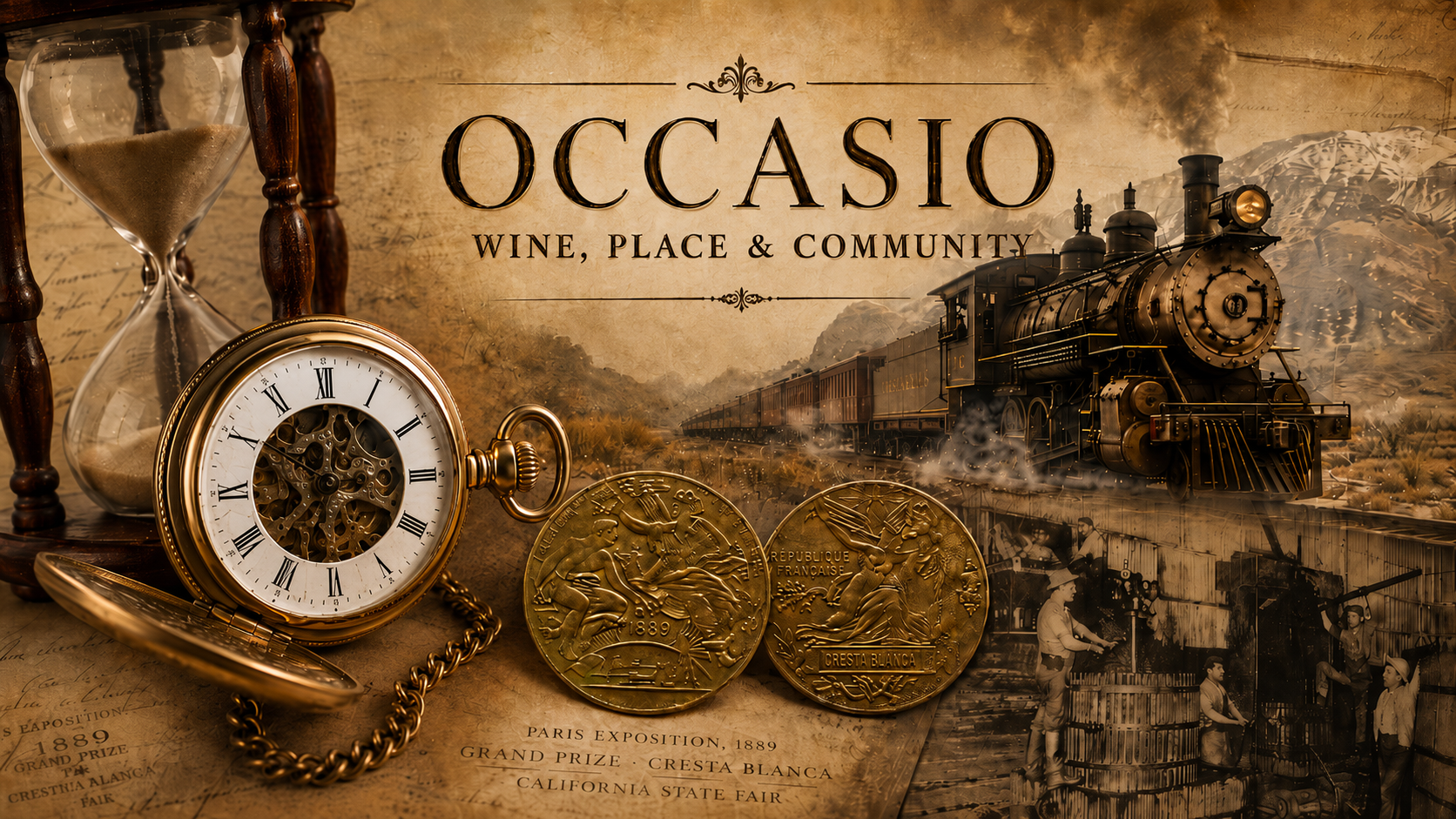
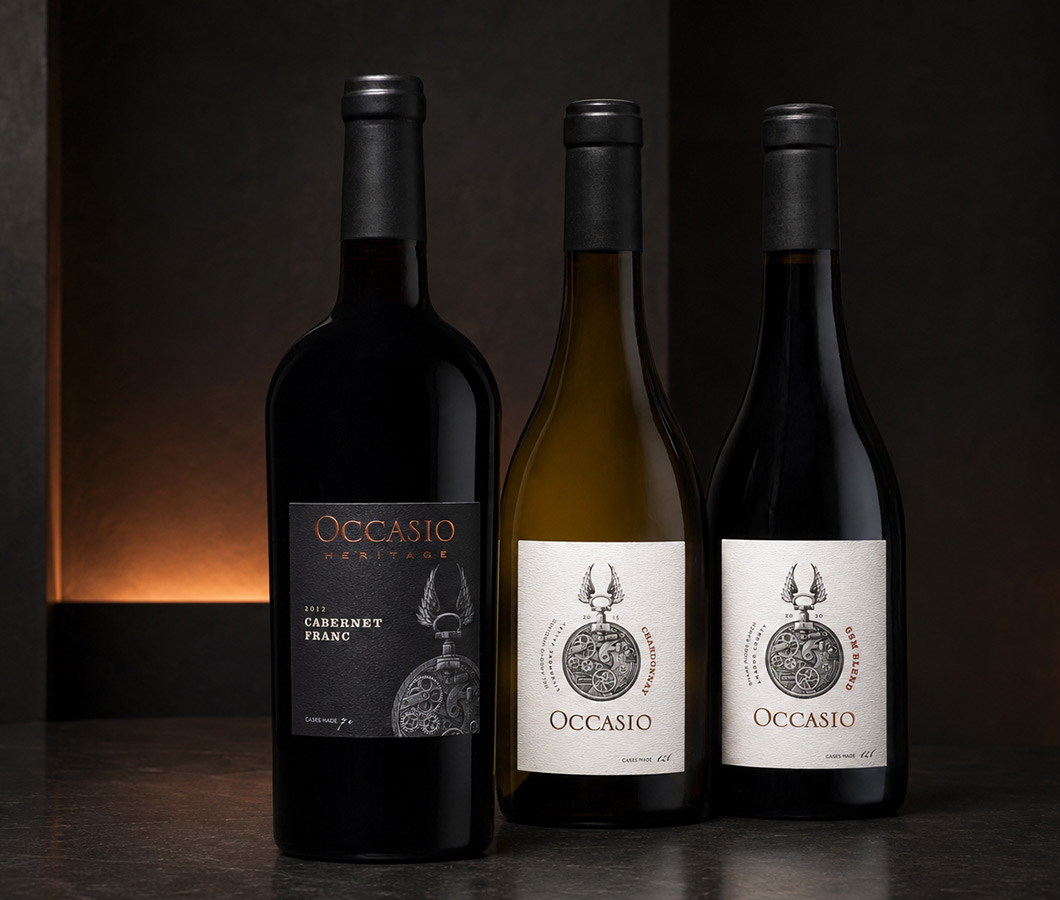
There is a pocket watch on the Occasio label. At first glance, it is a quiet symbol: a reminder that wine belongs to time—the time of harvest, the slow months in barrel, the patient years it takes for a vineyard to reveal its true character, and the moments we set aside to gather with one another.
But the watch has another story. On the Sidewinder Spirits label, the same watch shifts. Its crown moves from the top to the side, transforming it into a sidewinder—the classic railroad conductor’s pocket watch, associated with precision schedules, movement across distance, and the steady rhythm of the rails.
That small design change opens a larger story about Livermore Valley. It connects the vineyard to the railroad, the winery to the distillery, the bottle to the place itself. Above all, it reminds us that wine is never just a product. It is a living relationship between land, people, craft, memory, and time.
Before There Was a Wine Region
Long before Livermore Valley earned its reputation for wine, it was a working agricultural valley filled with grain fields, flour mills, livestock ranches, orchards, breweries, vineyards, and cellars. It was a place defined by soil, labor, weather, transportation, and tight-knit community.
Then the railroad arrived.
It did more than pass through Livermore. It helped create modern Livermore. The rails linked the valley to San Francisco Bay, inland markets, and the wider American economy. They carried people, barrels, bottles, equipment, grain, wine, and fresh ideas. They also delivered something precious in the days before household refrigeration: cold.
Ice was a technology. Harvested in the Sierra, shipped by rail, and carefully stored, it served homes, butchers, merchants, and beverage makers. By the late nineteenth century, Livermore’s brewery had built its own ice house to keep beer refreshingly cold through the warm months. That detail still matters today because wine, beer, brandy, and spirits are all shaped by time and temperature. Fermentation is an act of transformation, yes—but also one of control, patience, and care.
The railroad changed more than commerce. It changed possibility. A rural valley could now send its wines farther, receive specialized equipment more easily, and participate in a larger conversation about agriculture, taste, science, and reputation. Livermore’s story was no longer confined to the valley floor. It could travel.
Rail brought distance under control. Ice brought temperature under control. The pocket watch brought time under control. And in the midst of that transformation, Livermore Valley began to show what it could truly become.
Livermore’s First Promise
In 1889, Frona Eunice Wait published *Wines and Vines of California*, one of the earliest serious books on the state’s wine industry. Her chapter on Livermore did not describe just another district. It described a valley of genuine promise.
She highlighted Livermore’s soils, slopes, air, and waterways as conditions capable of producing the highest grades of wines and brandies. That distinction matters. Livermore’s early advocates did not see the valley merely as land that could grow grapes. They saw it as a place capable of producing wines with identity.
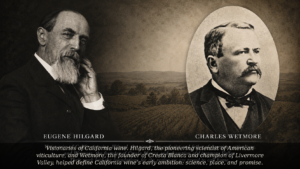
Charles Wetmore of Cresta Blanca believed the valley could make white wines in the Sauternes tradition capable of standing alongside Europe’s finest. Eugene Hilgard, the pioneering scientist of American viticulture, brought scientific rigor to the study of soils, climate, and agricultural potential. Together, figures like Hilgard and Wetmore helped define California wine’s early ambition: science, place, and the belief that Livermore Valley could stand among the world’s serious wine regions.
That belief proved well-founded. Cresta Blanca’s wines soon earned international acclaim at the 1889 Paris Exposition. Yet the deeper lesson goes beyond a single award. Livermore’s early reputation rested on a serious idea: that this valley, when farmed thoughtfully and understood on its own terms, could produce wines of real distinction.
Not bulk wine. Not anonymous wine. Not wine pretending to come from somewhere else.
Wine from here.
Wine Without Rules Does Not Mean Wine Without Roots
When we say “Wine Without Rules,” we are not rejecting standards, discipline, or history. Quite the opposite. We simply refuse rules that make wine less honest, less welcoming, or less connected to its source.
The old wine world had its own forms of rule-breaking. In the nineteenth century, many California wines were marketed under foreign names because consumers had been taught to value imitation over origin. California wine could be good enough to drink, but not always respected enough to stand openly under its own name.
That problem has not disappeared. It has simply changed form.
Today, labels can still obscure more than they reveal. A bottle may say “vinted,” “cellared,” or “bottled by” even when the brand has only a loose connection to the vineyard, the grower, or the actual making of the wine. The issue is not sourcing itself. Many great wines are made from carefully selected vineyards owned and farmed by others. The issue is whether the story being told matches the truth.
At Occasio, provenance is not marketing decoration. It is the foundation. We ask: Where exactly was it grown? Who farmed it? Why this vineyard for this wine? What did the vintage demand of us—and what did we choose not to do?
These are the questions that matter.
These are the rules worth keeping.
Wine Is a Relationship
We see wine differently than many. It is not merely a beverage, a score, or a flavor profile. Wine is a relationship.
It binds grower to winemaker, vineyard to cellar, past to future, and family to table. It carries the memory of a specific season and the unmistakable character of a place. It invites us to slow down, notice where we are, and appreciate who shares the moment with us.
That is why provenance matters so deeply. A vineyard name on a label is not just geography. It is a relationship made visible. It declares that real people cared for that land and that the wine carries something authentic forward from that exchange.
When vineyard identity and grower names fade, something essential is lost, even if the wine remains pleasant to drink. The bottle may still contain wine, but the relationship has been obscured. And when the relationship disappears, wine becomes easier to sell but harder to remember.
Why Sidewinder Distillery Belongs to the Story
Sidewinder Spirits did not begin as a separate venture from Occasio. It grew directly out of our winemaking.
We needed honest brandy for our Port-style wines, and we cared too much about provenance to stop at the vineyard gate. If we were attentive to the grapes, the harvest, the fermentation, and the barrel, then we also had to be attentive to the spirit that completed the fortified wine.
A fortified wine can only be as honest as the brandy that finishes it.
So we started distilling.
In doing so, we reconnected with another chapter of Livermore’s history. In the 1880s, the valley was recognized not only for fine wines but also for excellent brandies. Wine and distillation were never truly separate crafts; both were rooted in fruit, fermentation, time, and care.
Sidewinder carries that same philosophy forward—now with stills instead of fermenters, grain and botanicals alongside grapes, and barrels dedicated to spirits. The tools differ, but the commitment remains: know the source, respect the process, let time do its work, and make something worthy of being shared.
The sidewinder pocket watch captures that connection perfectly. It is a symbol of railroad precision, but also of patience and craft. It reminds us that both wine and spirits are shaped by what cannot be rushed.
Place, Craft, and Community
This is why Occasio and Sidewinder belong together. One listens closely to the vineyards. The other listens to grain, fruit, botanicals, barrels, and the still.
Occasio speaks through place.
Sidewinder speaks through craft.
Both are shaped by Livermore Valley. Both are shaped by time. And both exist because we believe that what is made with care should carry the full truth of where it came from.
The pocket watch reminds us of this truth. Before there is a bottle, there is a place. Before there is a place worth naming, there are people who tend it. Before there is community, there is a shared table.
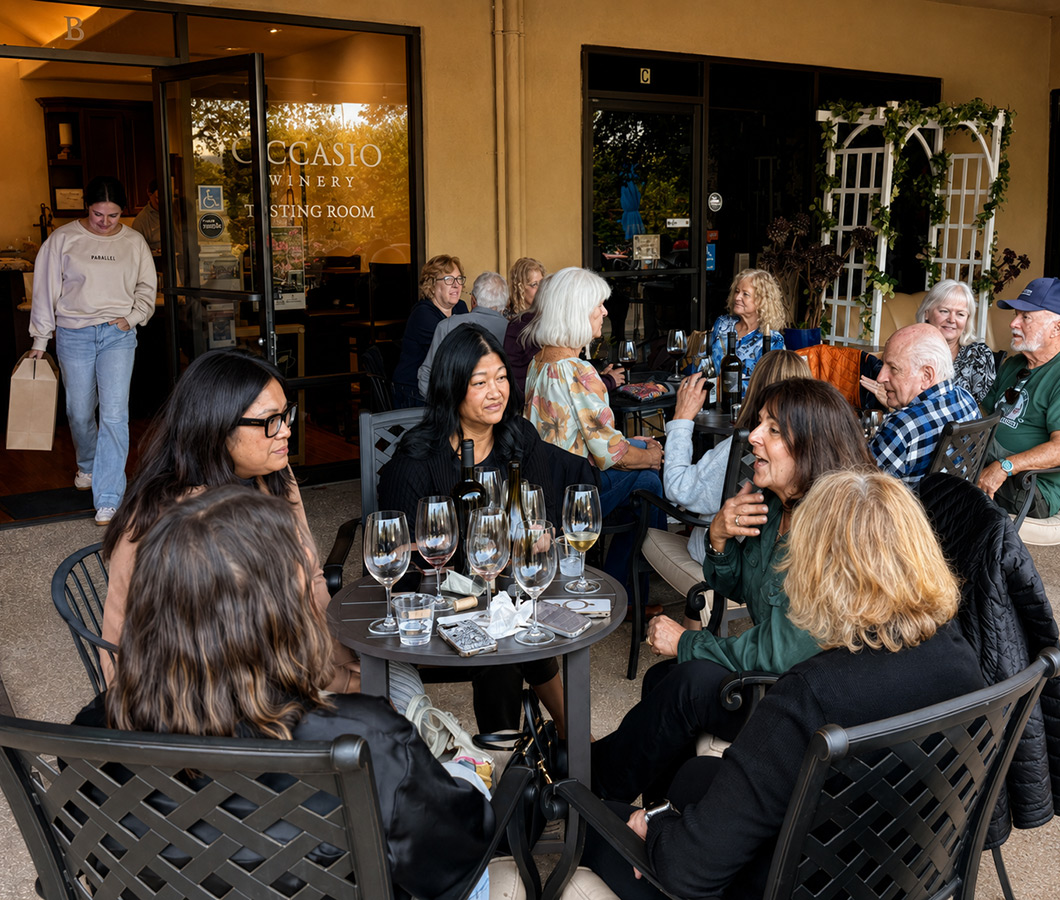
And that is where wine finds its highest purpose—not on a shelf, not in a score, not in a lifestyle image, but at the table, with people, in community.
Traditions Worth Keeping
As we head toward another harvest, we think less about wine as a product and more about wine as continuity.
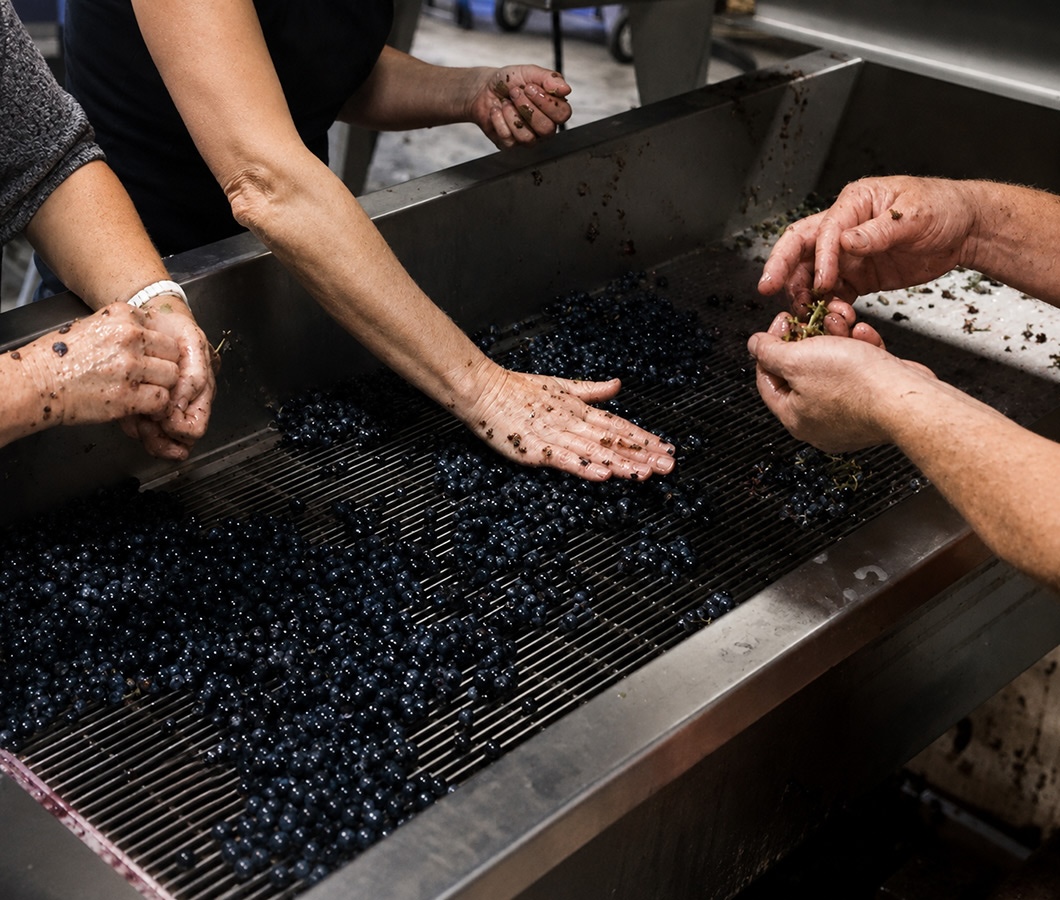
We think of the growers who tend the vines, the workers who bring in the fruit, the careful decisions in the cellar that preserve rather than erase character, and the families and friends who gather around meals. We think of the local history that still has lessons to teach.
These are traditions worth keeping. Vineyards endure because communities care for them. Wine exists because people gather. And the best wines do more than tell us what they taste like.
They tell us where we are.
At Occasio, that is the story we work to preserve—one vineyard, one vintage, one bottle, and one gathering at a time.