A Salad, a Rosé, and the Living Side of Terroir
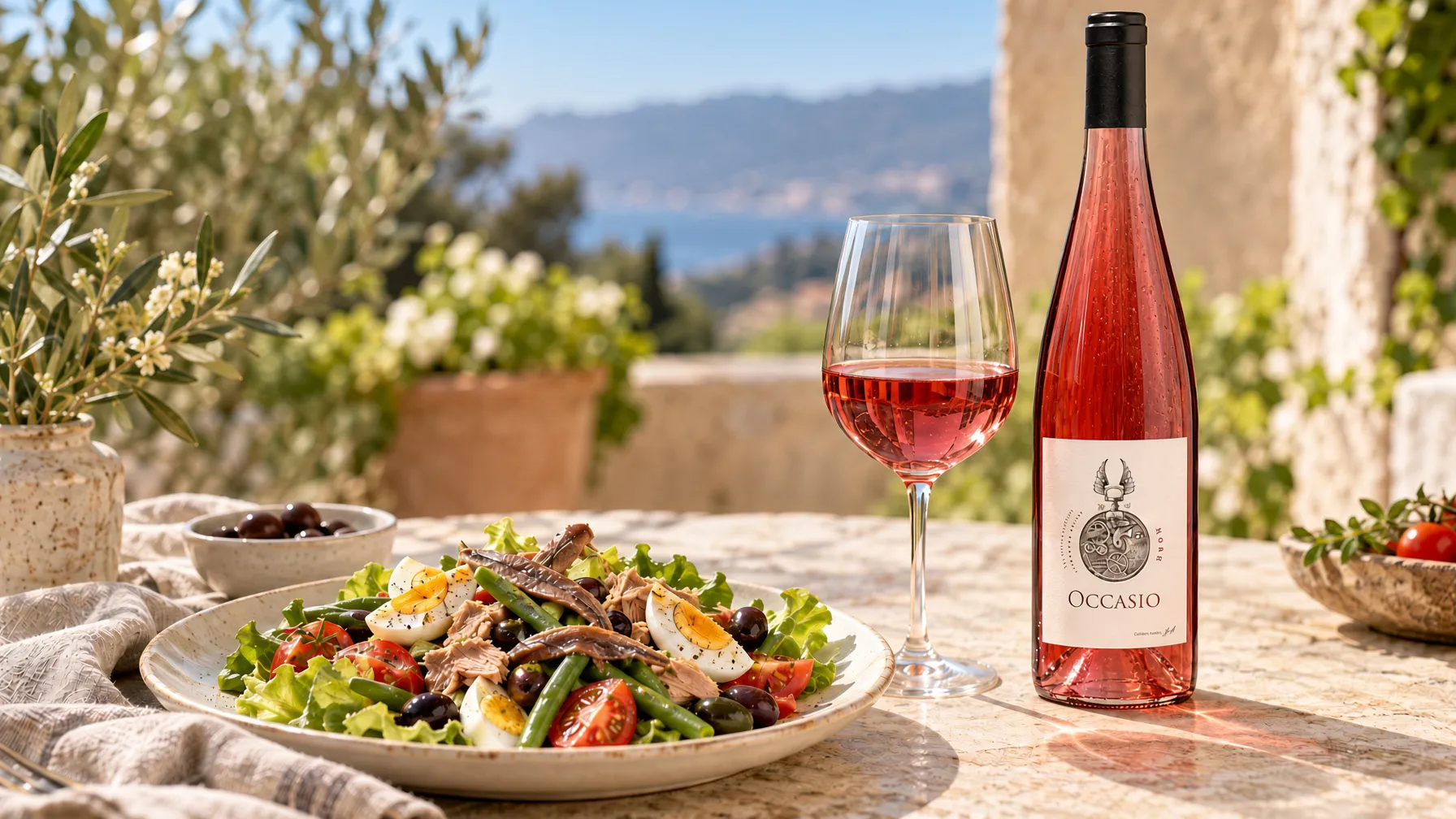
Many years ago in France, I found a pairing that stayed with me: a Niçoise salad and a Tavel rosé. The two worked beautifully together. Later, when I tried the pairing at Chez Panisse in Berkeley, the Tavel did not work as I remembered. Our own Occasio rosé, however, worked extremely well.
It left me with a question. What had changed?
The name of a dish travels more easily than its flavors. Tomatoes, olives, anchovies, the balance of the dressing, and the hand of the cook all matter. So does the particular bottle. A Niçoise salad in Berkeley need not taste exactly like one in France, even when both are beautifully prepared.
But I wondered whether there might be another layer: the microbial communities associated with the ingredients, and perhaps even those of the people preparing and tasting them.
I had no way to test that idea. It remained a question prompted by a meal. Research over the last decade gives me a reason to return to it.
The living part of place
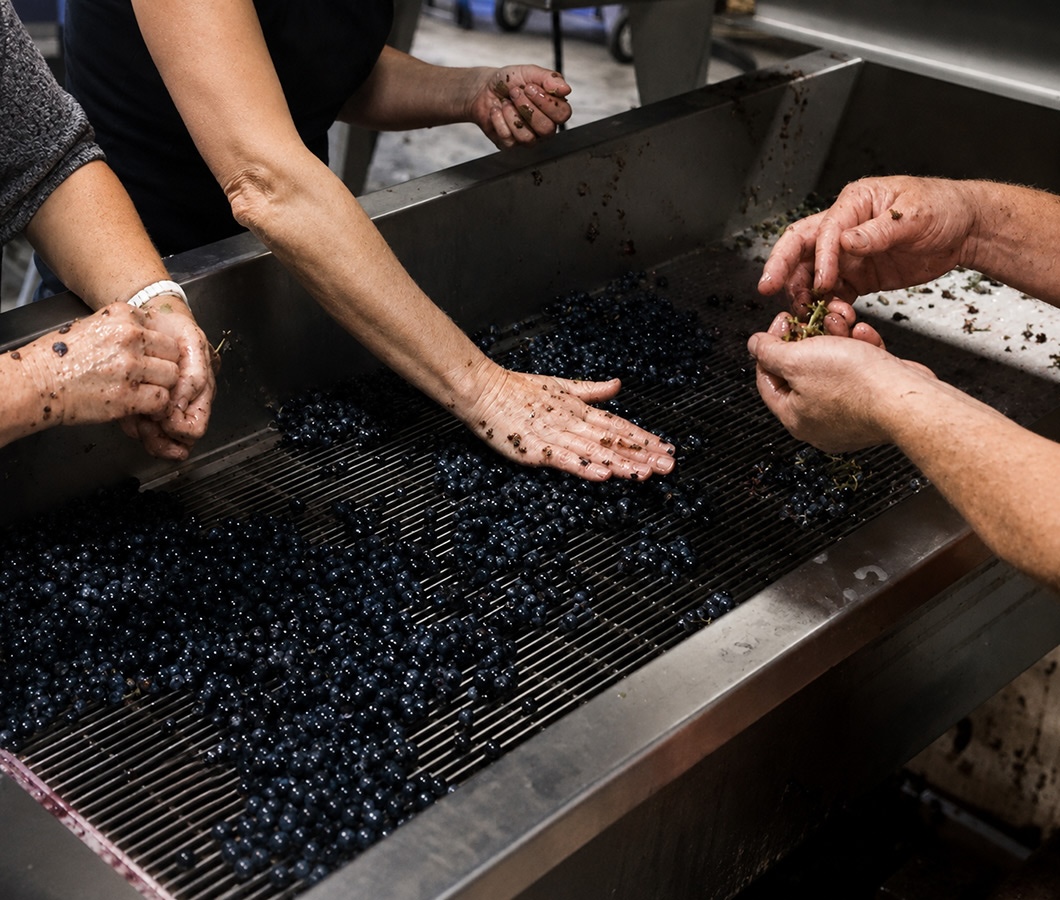
When we talk about terroir, we usually begin with soil, climate, exposure, and the decisions made in the vineyard. Yet grapes also arrive at the winery carrying communities of yeasts and bacteria. These organisms participate in fermentation, helping shape the wine’s chemistry.
Researchers have found that those communities can differ with region, grape variety, and vintage. California studies linked the microbial populations present early in fermentation with the chemical profiles of finished wines. These findings helped establish microbial terroir as a serious field of investigation.
Experiments in New Zealand took the question further. In 2015, researchers fermented the same Sauvignon Blanc juice with yeast populations from different regions and obtained different chemical profiles. A later experiment used mixed regional yeast communities to ferment a standardized Pinot Noir must. Again, the aroma chemistry changed. Holding the must constant allowed researchers to demonstrate a contribution from the yeasts themselves, although chemical differences still need sensory testing to establish how drinkers experience them.
For me, one especially relevant recent study followed Nebbiolo grapes from 38 vineyards through fermentations inoculated with a commercial yeast. Regional microbial patterns remained detectable and were associated with differences in wine chemistry. At Occasio, where we inoculate most fermentations, that is an interesting reminder: adding a selected yeast does not necessarily erase the microbial patterns that arrived with the fruit. The study does not establish that those native organisms caused all the differences, but it shows that their regional imprint can persist.
Persistence, however, does not mean permanence. Another study followed spontaneous fermentations at one winery over two vintages and found no consistently recurring yeast signature within its sampling. Some yeast clones returned; others did not. That finding challenges the idea of an unchanging microbial identity at that winery without settling the question for every vineyard or region. It also suggests that microbial terroir deserves to be considered alongside the changes of each growing season.
The vineyard’s living communities may contribute to a wine’s character. Their contribution unfolds within the conditions of the vintage and the choices made in the cellar.
The person at the table
My original question also reached beyond the vineyard. What happens when the wine meets the person drinking it?
In a 2015 laboratory study, researchers exposed aroma precursors isolated from white grapes to oral bacteria and microbial communities obtained from human saliva. The microbes released aromatic molecules from compounds that were initially odorless. Their activity varied substantially from person to person.
That offers a possible route through which the mouth’s microbial community can influence wine aroma. But releasing an aromatic molecule and perceiving it are different steps.
A later study examined both. Oral microbial communities were associated with the breakdown of certain aroma precursors in saliva, but those associations did not explain the sensory groups. For the compounds tested, people’s sensitivity to the released aromas was the main factor determining their sensory response.
The mouth is therefore part of the encounter, with microbes working alongside saliva, sensory sensitivity, and the brain’s interpretation of what we smell and taste.
Could this influence how a chef balances a dressing or seasons a dish? I still find the question worth asking. The research discussed here does not establish that connection, nor does it show that local food and wine pair well because their microbial communities somehow match.
Returning to the salad
I cannot look back at those meals and identify a microbial cause. Differences in ingredients, preparation, wine style, serving temperature, and the circumstances of tasting could readily explain why the pairing changed.
What has changed is the range of questions we can ask.
We have experimental evidence that regional yeasts can alter wine chemistry. We also have evidence that oral microbes can release grape aromas, alongside a clearer understanding of the limits of that explanation. Neither finding solves the mystery of my salad. Both make the mystery more interesting.
That is one reason I prefer to begin a pairing with curiosity. A combination remembered from France is a wonderful starting point. At a California table, we still need to taste what is actually in the glass and on the plate.
The Tavel worked beautifully in France. The Occasio rosé worked beautifully in Berkeley. I remain interested in what, in each moment, made the match.
Wine Without Rules. Not Without Roots.
Further reading
For readers interested in exploring the research:
- Regional yeasts and their contribution to wine chemistry — Scientific Reports, 2015.
- Mixed yeast communities and regional wine attributes — *FEMS Yeast Research*, 2023
- Regional microbial signatures during inoculated Nebbiolo fermentation — Applied and Environmental Microbiology, 2026.
- The persistence of wine yeast strains across fermentations — Food Microbiology, 2026.
- Oral microbes and the release of grape aroma compounds — Food Chemistry, 2015.
- Oral microbes, aroma release, and individual sensory sensitivity — Journal of Agricultural and Food Chemistry, 2020.