
Milk Washed Red Sangria
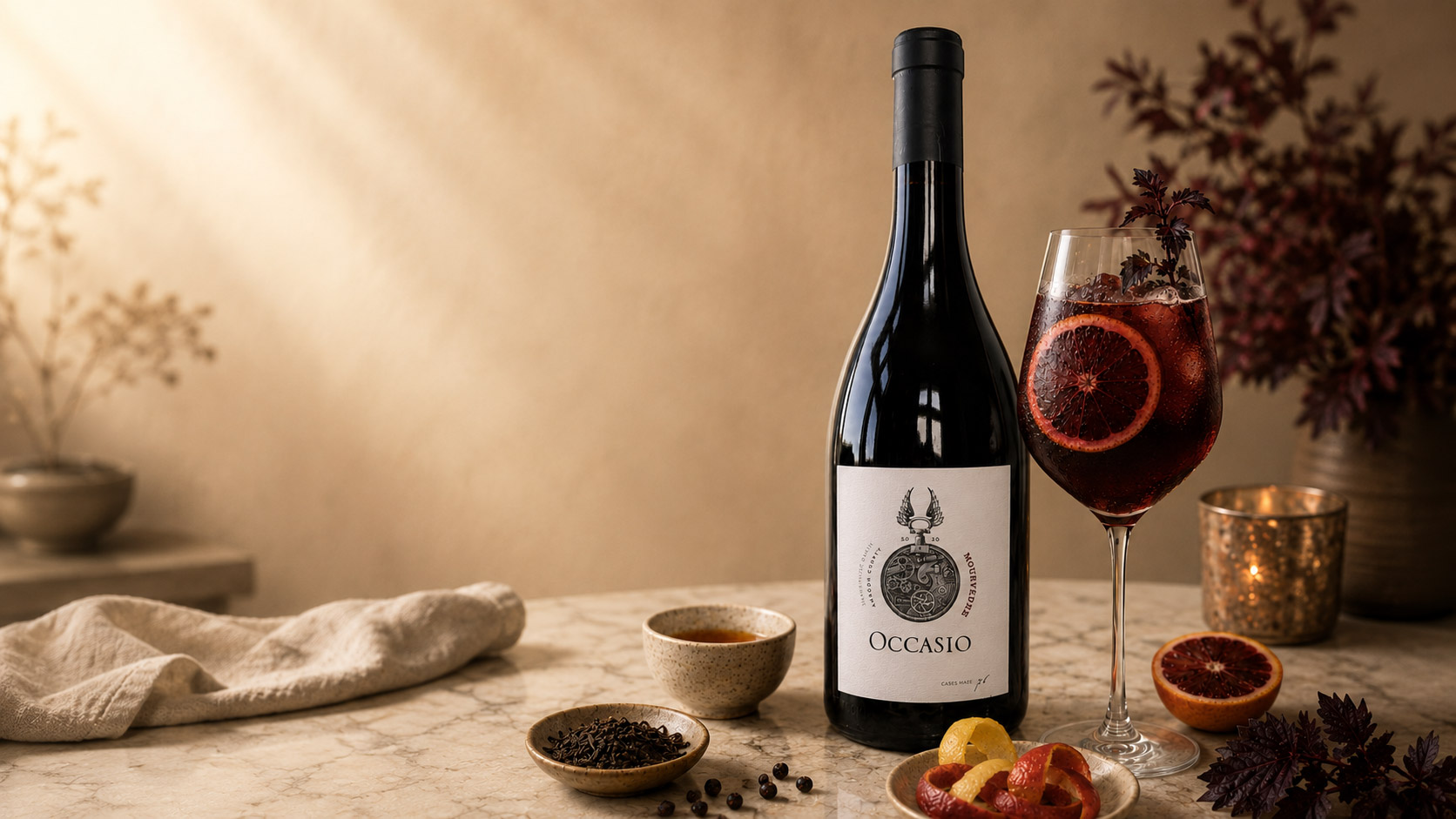
Sangria usually announces itself with fruit, color, and abundance. This one moves in the opposite direction.
Built around Occasio Mourvèdre, Assam tea, juniper, shiso, and citrus, the wine is deliberately pushed into darker, more savory territory before being clarified with whole milk. The process softens tannin and bitterness, strips away some of the color, and leaves behind a translucent, silky drink that still carries the character of the wine.
Whether this still qualifies as sangria depends on how tightly you choose to define the word. We think that is part of the fun.
The tea and botanicals extend the earthy, spicy side of Mourvèdre, while milk washing reshapes the texture and brings the whole drink into surprising focus.
Makes approximately 900 mL to 1 liter, depending on filtration loss
Ingredients
For the tea infusion
- 250 mL water
- 6 g Assam black tea
- 6–8 juniper berries, lightly crushed
- 2 tsp dried green shiso
- 2 broad strips orange peel, with as little white pith as possible
- 1 small strip lemon peel, optional
For the sangria
- 1 bottle (750 mL) Occasio Mourvèdre
- 250 mL prepared tea infusion
- 60 mL fresh lemon juice
- 250 mL whole milk
To finish
- 30–60 mL 1:1 simple syrup, to taste
- Additional lemon juice, if needed
- 2–4 drops 20% saline solution, optional
Method
Prepare the tea infusion
Heat the water to approximately 200°F. Add the Assam tea, juniper, shiso, orange peel, and optional lemon peel. Steep for about 4 minutes, then strain immediately through a fine sieve without pressing the tea or botanicals. Allow the infusion to cool completely.
It should taste somewhat stronger and more aromatic than a tea you would normally drink. The milk wash will soften both the tannin and the botanicals.
Build the punch
In a nonreactive container, combine the Mourvèdre, cooled tea infusion, and lemon juice.
Taste the mixture before clarification. It should seem slightly too tannic, slightly too aromatic, and a little sharper than the finished drink you are aiming for.
That is intentional.
Milk wash
Pour the whole milk into a large nonreactive bowl or container. Slowly pour the wine-and-tea mixture into the milk, rather than adding the milk to the wine.
Curds should begin forming almost immediately.
Give the mixture one gentle stir, then leave it undisturbed for at least 30–60 minutes. For a more complete wash, cover and refrigerate for several hours.
Filter
After the milk wash has rested, allow the fine curds to settle toward the bottom of the container. With red wine and black tea, the curds may form a relatively fine, compact sediment rather than the large flakes often seen in spirit-based milk punches.
Carefully decant the clearer liquid from the top into a clean container, leaving most of the settled curds behind.
Line a fine-mesh strainer with a coffee filter, several layers of cheesecloth, or another fine filtration material. Spoon just enough of the settled curd material into the filter to form a shallow filtration bed.
Slowly pour the decanted liquid through this curd bed. The first runoff may still be slightly cloudy. Collect it and carefully pour it back through the filter. Once the liquid begins running clear, continue filtering without disturbing, squeezing, or pressing the curds.
This approach is considerably faster than transferring the entire milk-wash mixture into the filter at once. The settled curds become part of the filtration medium, trapping the remaining fine particles as the sangria passes through.
Finish the sangria
Once the sangria is completely clarified, chill it thoroughly before making final adjustments.
Begin with 30 mL simple syrup and taste. Add more in 10 mL increments until the Mourvèdre fruit begins to emerge and the tea and botanicals feel integrated. If the finish seems flat, try a few drops of saline before adding additional acid or sugar.
The finished drink should remain dry, wine-driven, and lightly savory rather than sweet.
Serve
Serve well chilled in small stemmed glasses or coupes.
There is no need for ice. The milk wash gives the sangria a particularly smooth texture, and serving it neat allows that texture and the subtle botanical aromas to remain intact.
A narrow strip of expressed orange peel is enough garnish if you want one.
Make Ahead
This is an excellent drink to prepare ahead. The tea infusion may be prepared a day in advance and stored tightly sealed under refrigeration. The completed sangria may also be milk washed, fully filtered, sealed, and refrigerated overnight. In fact, a night of rest allows the flavors to settle together.
Make the final sweetness, acid, and saline adjustments after the sangria has chilled and shortly before serving.
Why Milk Washing Works
Milk clarification is not simply a way to make a cloudy drink clear. When the acidic wine mixture is added to milk, the milk proteins coagulate into curds. Those curds bind some of the tannins, pigments, bitter compounds, and suspended material in the wine and tea. That is particularly useful here.
Mourvèdre brings structure and dark fruit. Assam contributes additional tannin and maltiness. The milk wash softens those edges without erasing them, leaving a drink that feels unexpectedly polished and silky.
What begins as a dark, assertive mixture emerges lighter, clearer, and calmer.
Wine Without Rules
For a more citrus-driven version, increase the orange peel slightly and omit the lemon peel.
For a greener, more aromatic expression, increase the shiso modestly.
For a more spice-driven variation, add one or two additional juniper berries—but resist the temptation to keep adding botanicals. The point is not to turn Mourvèdre into gin.
You can also experiment with other black teas, herbs, or citrus peels while keeping the basic structure intact.
The important idea is that clarification does more than change appearance. It changes how the wine feels, how tannin is perceived, and how the flavors arrive in the glass.
And somewhere along the way, sangria starts becoming something else entirely.